

WATER-GUIDE Project Presented at the “Plastic Free Pliva” Festival in Jezero
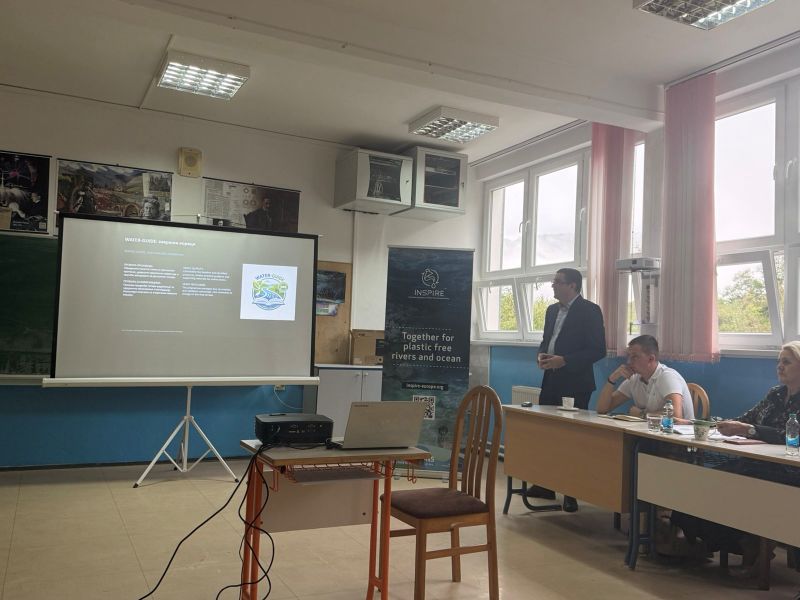
The WATER-GUIDE – Water Assessment for Transformation and Ecological Revitalisation – Guidelines for Unified Integrated Design and Ecological Recovery project, implemented by the Public Scientific Research Institution “Institute for Protection and Ecology of the Republic of Srpska” (IPERS), was presented on 11 September 2026 in Jezero as part of the “Plastic Free Pliva” Festival.
The third day of the Festival was dedicated to the topic “Preservation of the Pliva River – Problems, Consequences and Solutions” and brought together representatives of institutions, the scientific and academic community, local authorities and other relevant stakeholders. The event provided an opportunity to exchange experiences and discuss the protection of the Pliva River’s natural values and biodiversity, the impact of plastic waste and other pressures on the river ecosystem, as well as opportunities for concrete action and future cooperation.
As part of the introductory lecture, “Challenges in Preserving the Pliva River – Protection from Different Impacts”, Prof. Dr Predrag Ilić, Scientific Advisor at the Institute for Protection and Ecology of the Republic of Srpska, presented the broader context of Pliva River protection, natural and anthropogenic pressures, the importance of preserving natural habitats and biodiversity, and the need for an integrated approach to the protection of river ecosystems.
The event also provided an opportunity to present experiences and approaches developed through the WATER-GUIDE project. The main objective of the project is to develop guidelines for the revitalisation of water bodies in Bosnia and Herzegovina by applying international good practices, involving relevant stakeholders and adapting solutions to local and regional conditions. WATER-GUIDE is based on the transfer and adaptation of the non-physical replication model from the Szigetköz region in Hungary, with a primary focus on the Sava River Basin.
It was particularly highlighted that the approaches developed within WATER-GUIDE – including nature-based solutions, river habitat revitalisation, stakeholder and community engagement, and the connection of scientific knowledge with practical needs – have the potential to be applied to other river systems in the region, including the Pliva River. One of the project’s ambitions is to develop a model that can be adapted and transferred to other rivers facing similar environmental challenges.
The programme concluded with a round table discussion focused on preserving the natural character of the Pliva River, biodiversity, plastic waste and microplastics, the application of modern knowledge and technologies, and opportunities for inter-institutional, inter-municipal and regional cooperation.